
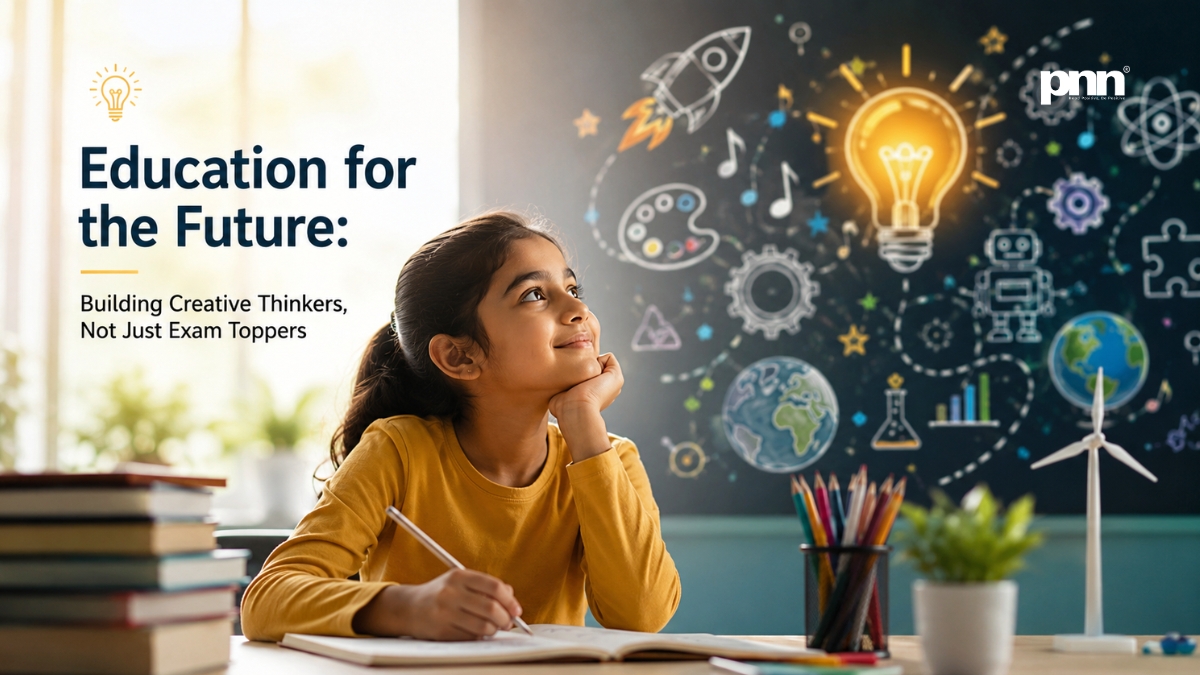
Mumbai (Maharashtra) [India], July 31: Every year, as March rolls in, you see the same scene play out in cities across India. Kids bent over their notes, cramming late into the night. Parents pace nervously outside exam halls, trading worried glances. News channels run stories about “exam stress,” like it’s just another season. Then, come May, newspapers plaster photos of toppers everywhere—their high scores hailed like cricket match victories.
But talk to anyone who actually hires young people—ask managers, start-up founders, folks building teams. They rarely mention marks. Instead, they want people who can solve problems, think on their feet, and adapt to whatever’s thrown at them. Toppers don’t always tick those boxes.
That gap—between what schools reward and what life out there really needs—is tough to ignore now.
The Problem With Focusing Only on Marks
For decades, Indian schools hammered on one message: memorise, regurgitate, get marks. Back when jobs meant following orders and doing what you were told, maybe that was enough. Not anymore.
Look at Nithin Kamath, who started Zerodha, the country’s biggest trading platform. He’s said over and over that his best hires were never class toppers—they’re the ones who get how people and markets work in ways that textbooks just can’t teach. Or take Zepto. Two college dropouts—Aadit and Kaivalya—built a business by challenging old ways of thinking, not by sticking to a syllabus.
Marks aren’t useless. But they’re just one way to measure a person, not the only way.
What Creative Thinking Is Actually About
Creative thinking isn’t just painting or doodling. It’s about asking the right questions, keeping your cool when things are confusing, and linking ideas from all over the place instead of sealing them off into neat little boxes.
Finland gets a lot of praise for its schools. Instead of tons of exams, kids there do projects. One project might combine geography, economics, and design. Finnish students do great in global rankings—not because they take fewer tests, but partly because they do. They have more time to really understand, not just cram.
India’s got its own bright spots. Riverside School in Ahmedabad, started by Kiran Bir Sethi, is built on one rule: “I Can.” Kids there look for real problems—unsafe roads, trash on the pavement, water getting wasted—and they go fix them. Her project, Design for Change, now stretches to 60 countries. It proves what happens when kids are trusted to think.
The Cost of Ignoring This
We pay, big time, for ignoring all this. More than 1.5 million engineering grads come out of Indian colleges every year. But companies say most of them aren’t quite ready for work—they need more training before they can handle real jobs. It’s not always a lack of facts; it’s missing the ability to think things through, communicate, and adapt.
And here’s the twist: Work is changing at rocket speed. AI tools already do a ton of routine stuff—reading files, answering simple questions—that once needed a person. Just knowing facts isn’t enough. Judgement, curiosity, knowing when an AI has made a mistake—those matter more. You can’t rote-learn that.
Some Good News
Honestly, things are shifting, if slowly. The National Education Policy 2020 pushes for less cramming, more hands-on projects, and mixing subjects. Now, a science student can learn music. A commerce student can pick up coding. You don’t have to live in just one box anymore.
Some states are trying new things, too. Delhi’s “Happiness Curriculum” and “Entrepreneurship Mindset Curriculum” aim to spark reflection, confidence, and real-world thinking—not just memorising textbooks.
Colleges are waking up as well. Ashoka University brought in a liberal arts model, letting students study economics, philosophy, and computer science together—something rare in India. Edtech companies like Byju’s (for all their flaws) showed that learning could be visual, interactive, and not just a teacher talking at you for hours.
What Parents and Teachers Can Actually Do
Changing the system is slow work. But smaller steps—those can start now. Parents can stop treating one scorecard as a summary of their child. Ask your kid what they tried, built, questioned, or figured out this week.
Teachers—yes, even with tight syllabuses—can let kids debate, build things, discuss. It doesn’t have to be non-stop lectures.
Schools shape what matters. Instead of only reading out topper lists in assembly, some schools now highlight “best solution of the month”—whether it’s a clever fix for a class problem, building a small tool, or making a solid argument in a debate. What you praise publicly shapes what students chase.
What Success Really Means
None of this means grades don’t matter. You need strong basics—math, reading, science. No country that’s gone far threw out rigour and only chased “creativity.” But we need balance. Exams are a part of growth, not the whole story.
India’s greatest strength—its massive young population—will really pay off if this generation learns to adapt, build, and think for themselves. The next big names—the ones who will change companies, invent stuff, reshape ideas—won’t always be the toppers in the paper. More often, they’ll be the ones who learned early to ask the question no one else thought to ask.